MAX MUSTARD
(From Apr 2022 to Feb 2025)
VR Platformer - Quest, PSVR2, Pico, PC


SUMMARY
Combining the best of first-person power-ups with the timeless charm of classic third-person platforming, Max Mustard offers an irresistible blend that will keep players hooked from the moment they step into its virtual world.
Embark on a heroic quest alongside the fearless protagonist Max to rescue adorable mudpups from the clutches of the devious Stubbins. Journey through immersive landscapes, facing tough challenges, unexpected twists and moral dilemmas, that force players to make difficult decisions that will shape the course of their journey.
Max Mustard is an award-winning, thrilling odyssey paying homage to the classic platformers of yesteryears while offering a fresh and innovative gaming experience. With 40 handcrafted levels, each bursting with surprises, inventive mechanics, and endless variety, Max Mustard is an epic adventure that will capture players' imagination and keep them coming back for more!
You can find more information about Max Mustard and other games made by Toast Interactive here: https://toastinteractive.com/
RESPONSIBILITIES
Working as a Level Designer at Toast Interactive, between April 2022 and February 2025, I cemented my passion for Level Design while crafting levels praised by players and winning multiple awards.
While a part of the design team, my responsibilities were:
-
Production and ownership of platformer levels, from design and documentation to blockout stages and final release.
-
Design levels using the Kishōtenketsu philosophy.
-
Prototyped features and mechanics using Unity Events.
-
Iterating, balancing, and adjusting gameplay based on internal and external feedback.
-
Playtested the game thoroughly, giving valuable feedback to other designers, engineers, and artists.
-
Contributed to the game's economic design by balancing the availability of coins and the cost of upgrades.
-
Collaborated with Engineers, Environmental Artists, and QA to deliver a high-quality and cohesive game.
-
Supported Production by using ClickUp for tracking work, estimating delivery dates, and assisting in the development process.
Designing for VR
Designing games for Virtual Reality has specific challenges associated with it. One of the biggest studio's concerns was to mitigate the amount of motion sickness players would feel while playing. The solution found was to limit the camera movement and give players maximum control over when it should move.
That solved the motion sickness issue for the most part, but brought a couple of limitations when designing levels:
-
Since the camera wouldn't follow the player laterally, the gameplay area was very narrow. Placing gameplay too far from the centre would create perspective and depth perception issues.
-
Even with the limitation above, we couldn't design levels too linear, as it would give away the fact that players are only moving forward most of the time. To solve that, we agreed on distributing gameplay in all directions.
Amazing challenges were born out of those limitations. Designing levels was a complex puzzle, more than ever before, that forced me to think out of the box and come up with creative solutions to deliver a great experience to players.
Design Study: The Tutorial
During my time working on Max Mustard, I was responsible for multiple levels, but the most important of them was, undoubtedly, the Tutorial level. As a crucial level for the game, it required numerous iterations and countless playtest sessions.
Here are a couple of challenges I've found when designing the tutorial level for Max Mustard:
-
Teaching players the basic mechanics and movement without UI. I wanted it to be done in an immersive way where players wouldn't feel they're being taught something.
-
Pacing the level between gameplay and the narrative and cinematic beats.
-
Balancing the difficulty so it was easy for beginner players but challenging enough to keep them interested, especially since this level would be the very first thing they would experience in the game.
I will be describing the design process behind the making of the tutorial level for Max Mustard.
PLANNING
The first step was writing a document for the level, detailing its mechanics, pace, story beats, VR moments, and the first version of the level's general layout. Some considerations were made:
-
There would be a cinematic piece at the very start of the level. A second piece would be presented towards the middle of the level.
-
Players would have to learn basic movement and the FPS mechanic in this level. No requirement to use the hovering mechanic.
After approval from the Design Lead and Creative Director, I then started blocking out the level using Unity and a level-kit assembled in-house with third-party tools. During this stage, there was a lot of feedback received and iterations made.


DESIGN: TUTORIAL
"Teaching players the basic mechanics and movement without UI. I wanted it to be done in an immersive way where players wouldn't feel they're being taught something."
This is probably the part where I learned the most.
With a target audience that includes both experienced and new VR players, designing a tutorial level that would please both was a challenge. But not impossible. Getting there required multiple playtesting sessions and non-ending feedback and iteration.

Movement:
The initial area is large and open, with lots of space for players to move around and understand how the character works.
A simple in-world wooden sign is present to show players who are unfamiliar with control conventions. It is positioned so that it is visible but does not take players' attention away from the way to go.
Beyond coins and crates for the player to play around, I used composition, leading lines, and framing to leave no doubt about where they should go.
A wavy path just after the initial area gives the player time to clearly assess the place to go, with the added benefit of breaking up the monotony of a straight run.
Adding coins above the path allows players to test the character's jump and the different heights they can reach.

Jumping:
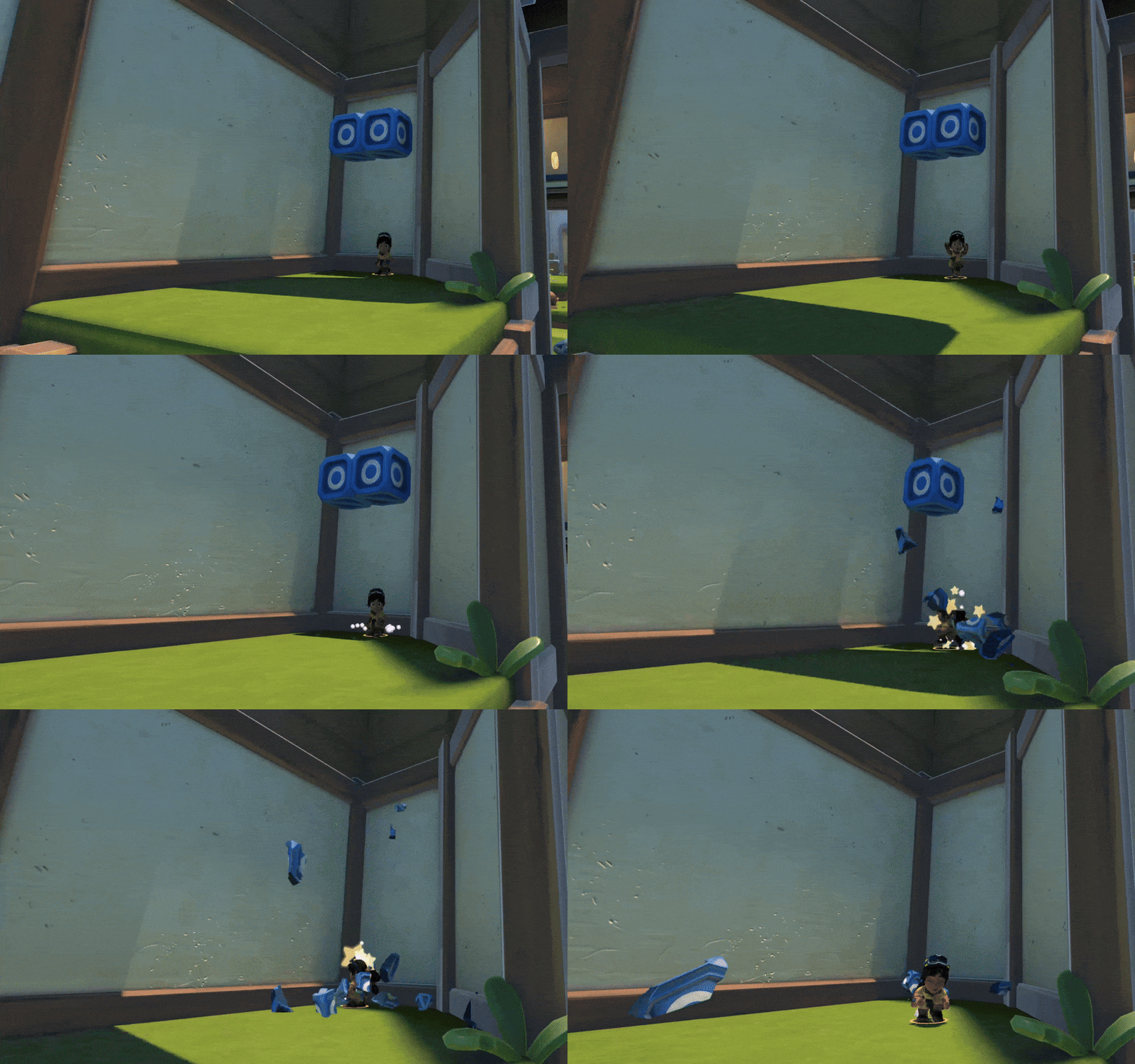
If players ignore the coins above the wavy path, they can reach this area without ever jumping.
These crates create an optional objective for players that demands a jump.
But I've placed them just above the regular "tap jump". For the crates to be broken, players have to hold the jump button, learning that mechanic.
To complete the first tutorial about movement and jumping, players now face the path ahead with a platform that can only be overcome by jumping. Players can't proceed unless they use this essential mechanic.
As with the first area, there is an immersive wooden sign to teach players unfamiliar with controls which button to press.


Enemies and Combat:
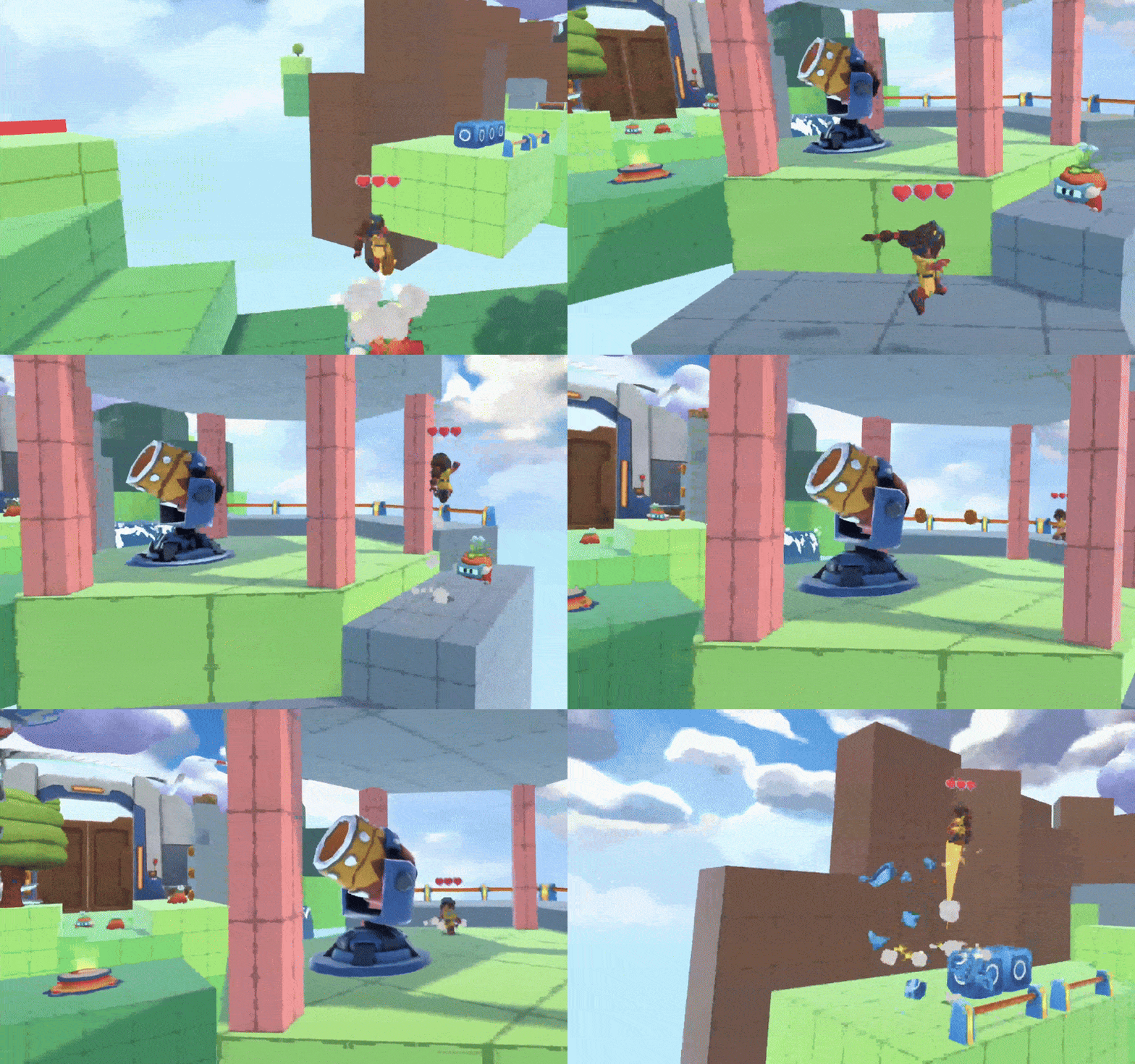
The first enemy the player ever encounters in the game is walking on a predictable path on a platform just below the player. This creates a safer environment for them to test the waters and see how combat works.
A checkpoint was placed just before this part to ensure players who have a hard time against enemies won't lose too much progress and get frustrated.
There is another enemy present on the main path, but at the same level as the player this time.


In this area, players can choose to face optional challenges for extra rewards:
-
They can test their jumping on the right and reach the alcove with invisible coins.
-
They can defeat the enemy on a platform above to reach the secret island on the left.
Unique Mechanics:
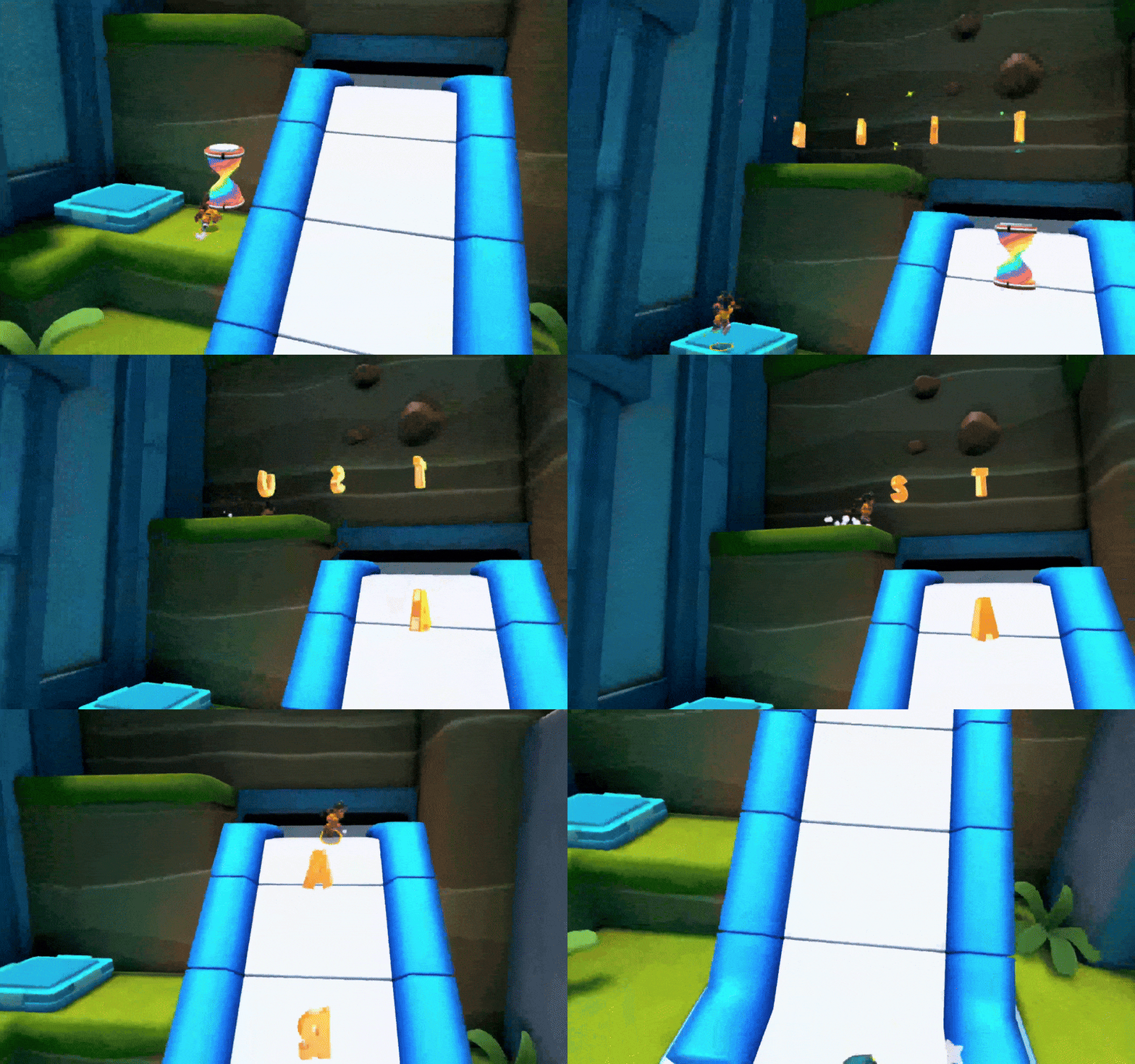
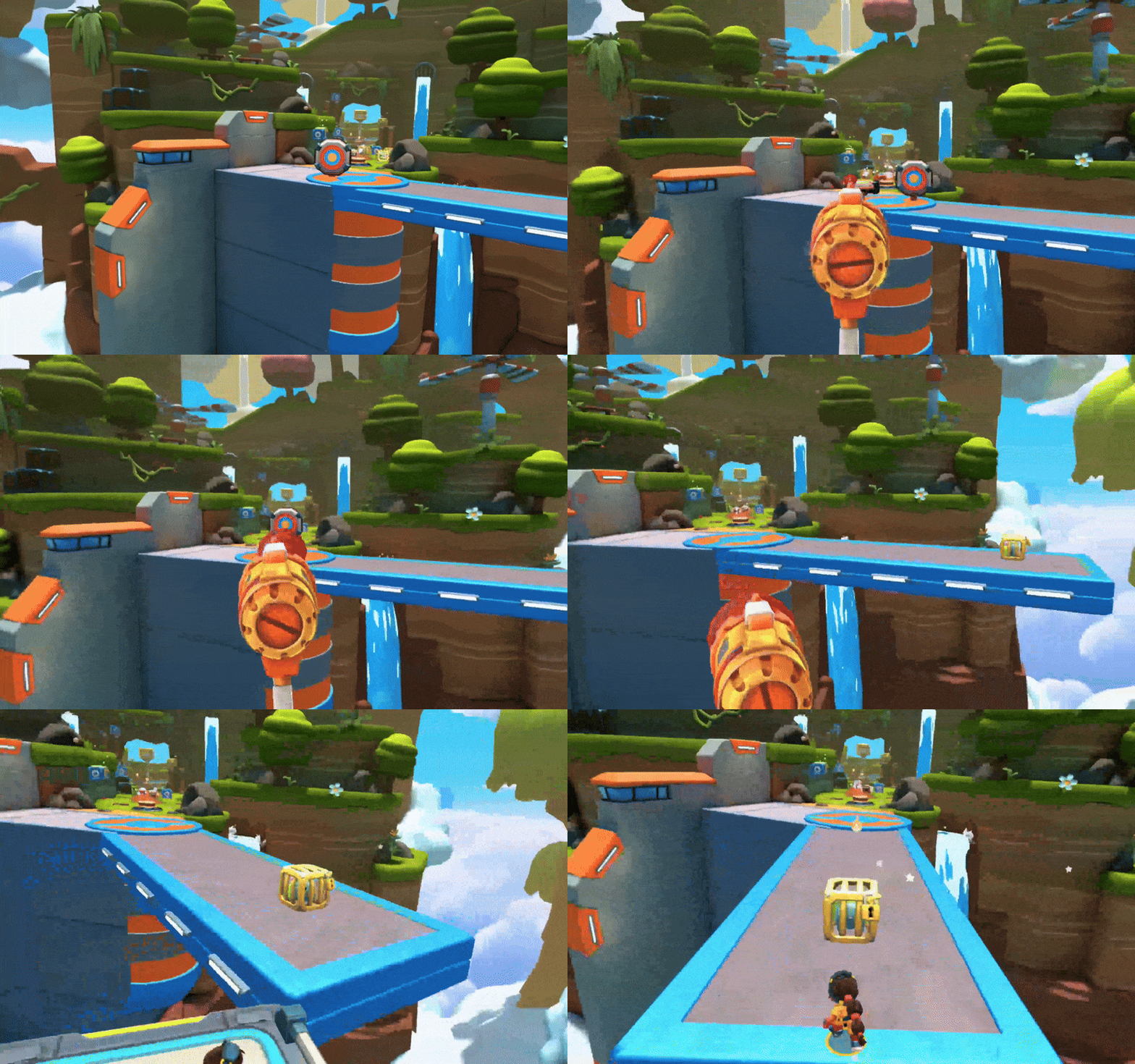
The Hourglass mechanic is present on every level and consists of a sequence of collectibles forming the word MUSTARD. Players get extra rewards if they collect all the letters in time.
It was important that the first time players faced this mechanic, the word MUSTARD would be clearly readable. But making it a straight line of letters would be boring. I decided to put the mechanic in a way that most of the letters would be in line, and the last few would direct the charater close to the player, creating a intimate moment between them.
Gadgets:
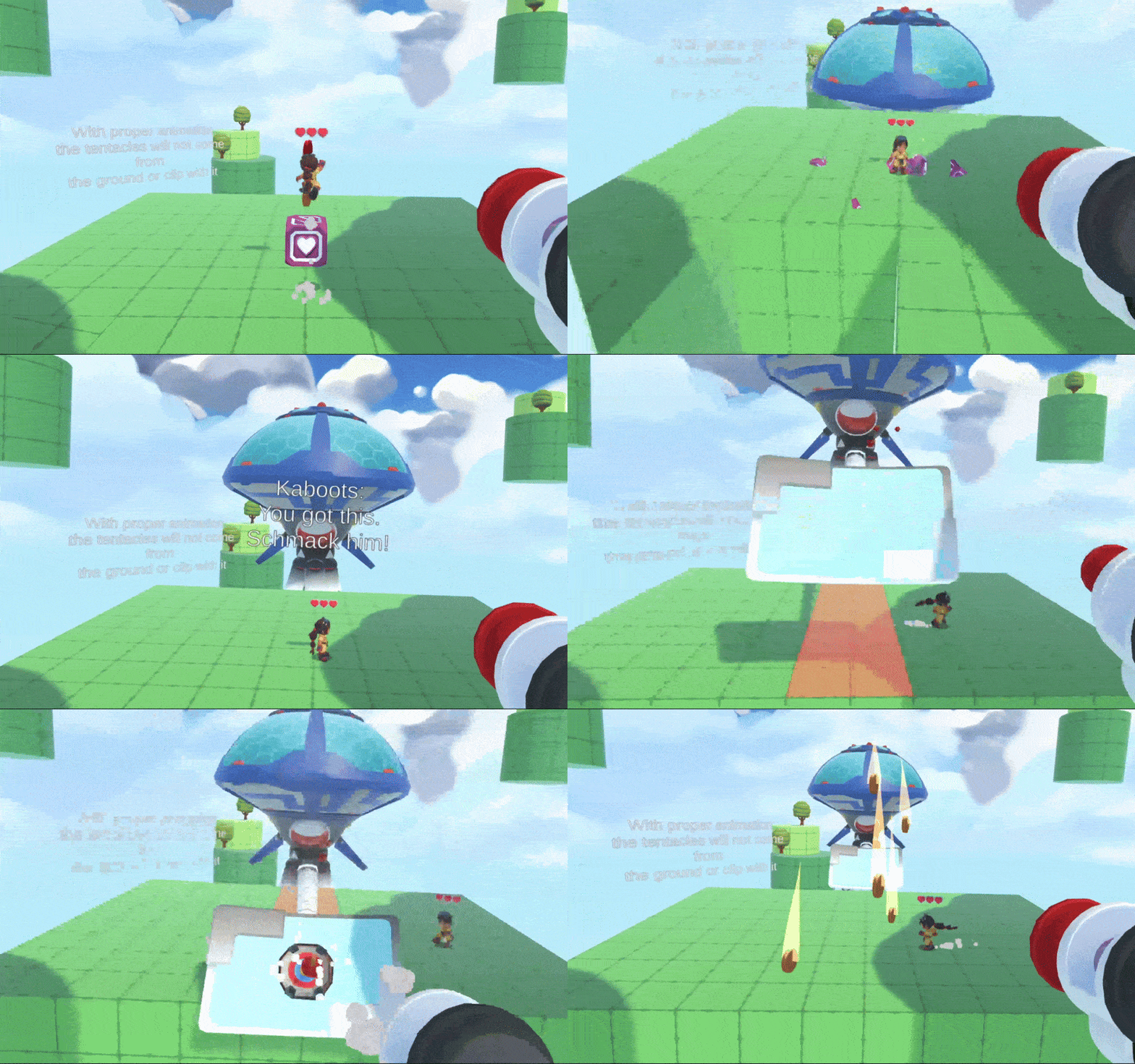
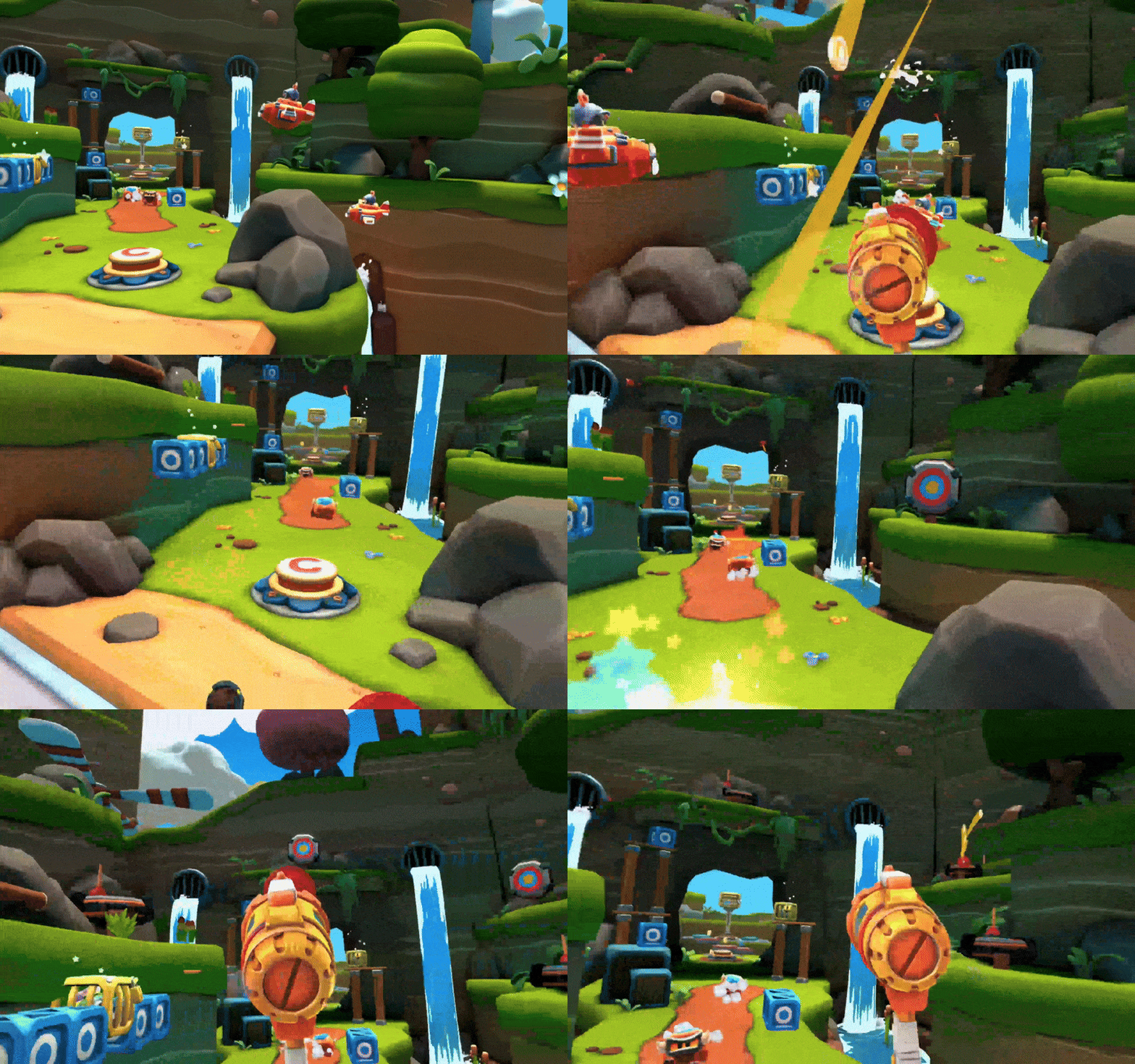
An important part of Max Mustard is the ability for players to use gadgets, as in an FPS, to assist the character in overcoming challenges.
After grabbing a gadget for the first time, players are required to hit three easy and static targets in order to open the path forward. I approached teaching players how to use gadgets in a freeform manner, letting players enjoy a nice open area with plenty of static and moving targets, with no time pressure or concerning enemies.
DESIGN: PACE & NARRATIVE
"Pacing the level between gameplay and the narrative and cinematic beats."
Beyond teaching the mechanics, the Tutorial level would also be responsible for presenting the player with the game's backstory. That needed to be accomplished without the help of dialogues or text. The end result was two cinematic pieces and environmental storytelling.


My responsibility was to make sure the pace between gameplay and narrative was correct, giving players a nice experience, without overexposure to narrative or long times without any action or input. The first cinematic piece needed to be played first, before any type of gameplay.

I used a simple approach of alternating cinematic and gameplay pieces. That resulted in two things:
-
Made sure players were interacting with the game regularly enough, without too much downtime watching a cinematic piece.
-
Control the flow of the player's emotions, putting the peak at the 2nd cinematic piece, but making sure the gadget section doesn't allow the emotions to fall too much. It was important that the player finished the level happy with the game
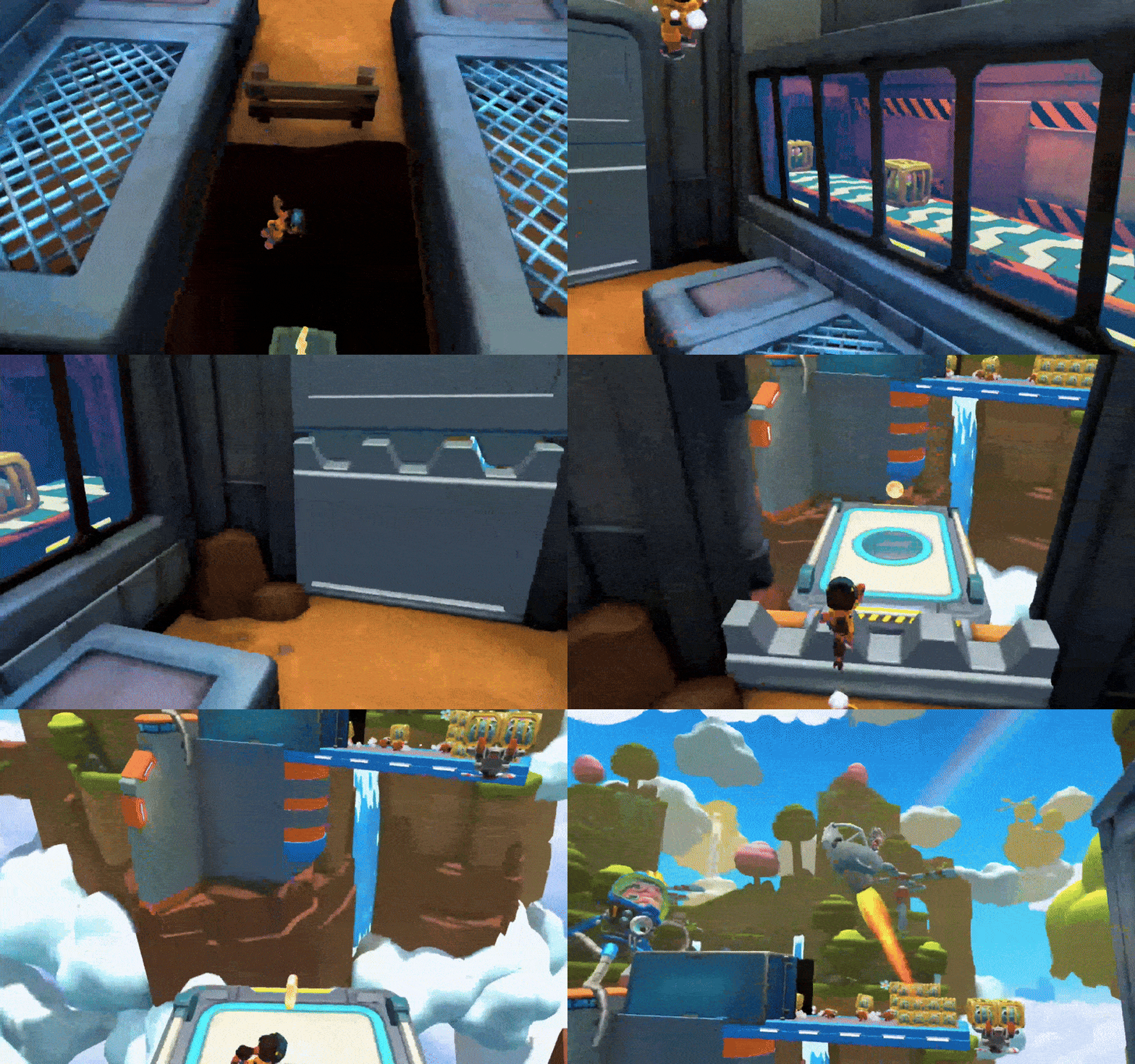
In the area just before the revelation of the 2nd cinematic piece, I used an enclosed factory room, symmetric and cold, with Mudpups being caged like in a production line, to prepare players' emotions for what was to come.
I used it to manipulate the space available to players as well. The factory room is small and tight, while the cinematic plays in a beautiful and open large area.

After a strong emotional moment, players were served a fun and chilling experience with the gadget and all the targets, to let any negative emotion go away.
All that in a beautiful and colourful area, with plenty of movement and life.
To conclude the narrative delivery in the Tutorial level, the environment around the final area hints the reason for the Mudpups' kidnapping.

CONCLUSION
Being responsible for the tutorial level in Max Mustard was an extremely valuable and rewarding experience for me. It made me even more conscious of my design decisions and consequences, and I became especially aware of players' many backgrounds and skill levels.
It also showed me how crucial the playtesting sessions are for a level. There is so much you can notice when you are super involved in a level's conception, and extra and diversified opinions are valuable and necessary for the best result.